Home > Politics > Makinde And Wike Clash Openly Over PDP C...
Makinde And Wike Clash Openly Over PDP Crisis
By AnchorNews | 04 Feb, 2026 08:18:53am | 394
By Sochima Agbo
AnchorNews Analysis
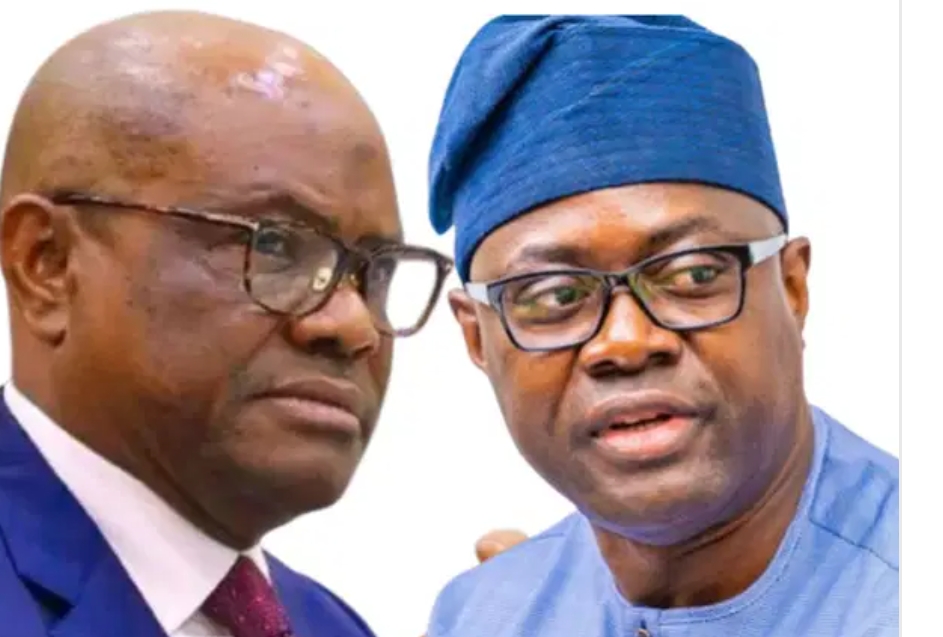
What should have been a routine commissioning of a party secretariat in Ibadan quickly degenerated into yet another episode of the Peoples Democratic Party’s self-inflicted drama. Governor Seyi Makinde of Oyo State and the Minister of the Federal Capital Territory, Nyesom Wike, are no longer trading subtle political jabs; they are now exchanging open insults, with “vagabond” becoming the latest weapon in the PDP’s expanding vocabulary of internal warfare.
Makinde’s declaration that “vagabonds” had been expelled from the PDP was clearly aimed at Wike and his loyalists. His attempt to cloak the attack in Yoruba proverbs and moral metaphors did little to disguise its target. By framing himself as a repentant former accomplice who had now “seen the light,” Makinde sought to reposition himself as a reformed party loyalist and, more importantly, a stabilising force within a fractured PDP.
Wike’s response was swift, brutal, and entirely predictable. Through his media aide, the FCT minister dismissed Makinde’s posture as late repentance driven by fear, not conviction. The message from Wike’s camp was simple: Makinde cannot rewrite history, and his sudden embrace of party unity cannot erase his role in the internal sabotage that weakened the PDP in the run-up to the 2023 elections.
Beyond the colourful insults lies a deeper, more consequential struggle: control of the PDP’s soul ahead of 2027.
Makinde’s speech revealed anxiety about the future. His insistence that the PDP must not be “held down for another party to be in power” is less a moral stand and more an admission of how close the party has come to political irrelevance through internal betrayal. His public trust in the judiciary to resolve PDP’s leadership disputes also betrays a party that has outsourced its internal coherence to the courts.
Wike, on the other hand, is fighting a different battle. Having lost formal control of the party machinery, he is determined to remain politically relevant within PDP structures, even while serving in an APC-led federal government. His language of “vampires” and “internal enemies” signals a scorched-earth approach: if he cannot dominate the PDP, he will destabilise it enough to remain indispensable or feared.
The tragedy is that while Makinde and Wike duel for moral superiority, the PDP bleeds credibility. Ordinary party members see a party more committed to name-calling than nation-building, more focused on settling scores than presenting a compelling alternative to the ruling APC.
The commissioning of the Oyo PDP secretariat should have been a symbol of rebuilding and renewal. Instead, it became a reminder that the PDP’s greatest opposition is no longer external - it is internal, loud, and increasingly undignified.
If this “dirty fight” continues unchecked, the PDP risks entering 2027 not as a serious contender for power, but as a cautionary tale of how ego, revenge, and unresolved grudges can hollow out even the largest political parties.
One thing is clear: no party wins elections by calling itself names.
Leave a Reply
Your email address will not be published. Required fields are marked *
Category
 Culture & Tourism
 News
News Crime & Security
 Opinion
 Entertainment
 Education
 .jpeg) Interviews
Interviews Politics
 Technology
 Business & Economy
 Sports
  Religion
  Health