Home > Opinion > Enugu’s Revenue Surge and the Missing ...
Enugu’s Revenue Surge and the Missing Impact on the People
By AnchorNews | 22 Apr, 2026 09:19:11am | 499
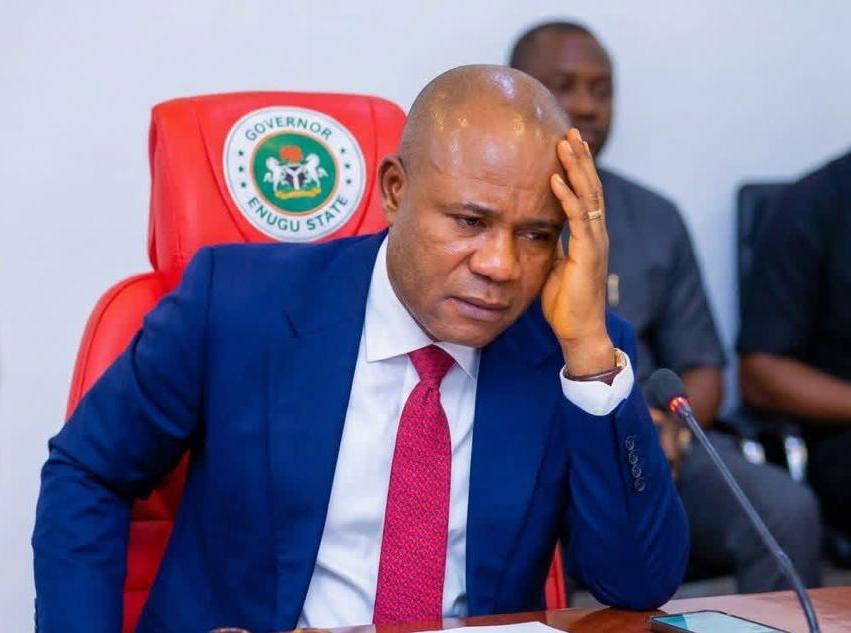
By Dr. Buchi Nnaji
The administration of Peter Mbah has been quick to present Enugu State’s internally generated revenue figures as evidence of reform, efficiency, and fiscal transformation. On paper, the numbers look striking. According to multiple national dailies, including Punch Newspapers and The Nation Newspaper, Enugu State recorded ₦406.77 billion in IGR in 2025, an increase of 125 percent from ₦180.5 billion in 2024. Projections for 2026 push the figure toward ₦870 billion. Even more dramatic is the comparison with 2023, when IGR stood at approximately ₦37.4 billion.
This trajectory is being marketed as a success story of governance.
But beneath the statistical excitement lies a far more uncomfortable question: what exactly has improved in the daily lives of the people whose economic environment is being taxed, monetized, and expanded so aggressively?
Because beyond the press releases and fiscal summaries, the lived reality across Enugu State tells a more complicated story.
Markets are not reflecting the same optimism as the revenue charts. Traders continue to report weak patronage and shrinking profit margins. Transport operators remain trapped in rising operational costs. Households are still battling a cost of living that shows no meaningful signs of easing. And for young people, the promise of expanded opportunity has not matched the speed of the state’s revenue growth. In short, the burden on citizens appears stubbornly intact, even as state earnings accelerate.
The central contradiction of the Mbah administration’s fiscal narrative is 'rapid revenue expansion without a visibly proportional easing of public hardship.'
Revenue growth, in itself, is not governance success. It is only meaningful when it translates into measurable welfare outcomes. Without that translation, it risks becoming a purely administrative achievement: impressive in reports, but disconnected from reality.
Even more troubling is the structure behind the revenue being celebrated. Available reports suggest that a significant portion of the ₦406.77 billion is derived from non-tax sources, forming the overwhelming share of total collections. That structure raises legitimate questions. What exactly constitutes these inflows? How sustainable are they? And more importantly, how are they being deployed? Transparency is not optional in such circumstances; it is the minimum requirement for public trust. Yet, clear, accessible breakdowns remain limited in public discourse.
At the same time, Nigeria’s broader economic environment cannot be ignored. Inflation continues to erode household incomes and weaken purchasing power nationwide. In such a context, a state experiencing accelerated revenue growth is expected to provide cushioning interventions that soften economic pressure. Instead, what citizens experience is largely unchanged economic strain, raising uncomfortable questions about fiscal priorities under the current administration.
The projection of ₦870 billion in 2026 further intensifies scrutiny. Ambition in revenue generation is not inherently problematic, but when it is not matched by visible improvements in welfare, it raises concerns about direction and intent. There is also a legitimate fear that aggressive revenue targets may translate into heavier levies, stricter enforcement, and increased financial pressure on an already strained population.
So what should be expected from a state generating over ₦406 billion annually?
At a minimum, citizens should see functioning and well-equipped hospitals, not overstretched health facilities. Public schools should reflect clear improvements in infrastructure and quality. Roads and basic infrastructure should extend beyond showcase projects into everyday communities. Small businesses should feel supported, not squeezed. And most importantly, economic relief should be tangible, not theoretical.
These are not exaggerated expectations. They are baseline governance standards.
Yet the gap between fiscal performance and public experience remains difficult to ignore. And that gap is where the real political risk lies for the Mbah administration. Because when revenue growth becomes visible only in government accounts and not in household realities, it begins to lose legitimacy in the eyes of the governed.
At present, the people of Enugu are not disputing the figures. They are disputing their meaning.
They are not denying that revenue has increased. They are asking why their lives have not improved at the same pace.
Until that question is answered not with projections or statistics, but with visible and sustained improvements in everyday living conditions, the narrative of fiscal success will remain incomplete.
In governance, revenue is not the final scorecard. It is only the starting point. The real judgment begins when citizens ask a simple question: if the state is earning more than ever before, why does life still feel just as hard?

Leave a Reply
Your email address will not be published. Required fields are marked *
Category
 Religion
  Sports
  Politics
 Opinion
.jpeg) Interviews
Interviews Business & Economy
 News
News Health
 Technology
 Education
  Entertainment
 Culture & Tourism
 Crime & Security