Home > Culture & Tourism > Is it right in Igbo culture, tradition f...
Is it right in Igbo culture, tradition for married woman to bear her father’s surname?
By AnchorNews | 05 Jun, 2024 08:29:00am | 393
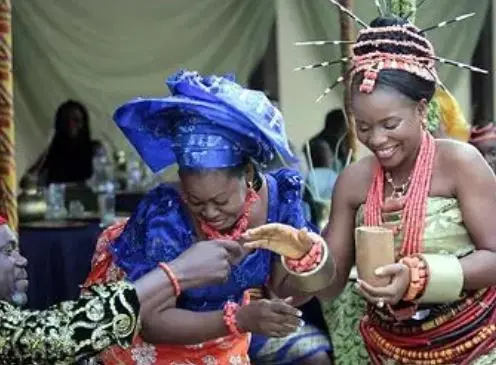
…No, marriage in Igbo land is not a social contract but transformation from one family to another—Prof. Nwaezeigwe
…It is against Igbo culture — Akpulonu, Abia lawmaker
…There is nothing wrong with it — Prof. Apata
…It is destruction of Igbo tradition — Group
…Adichie is perfectly in order — Prince Okwor
RENOWNED author, Chimamanda Adichie’s position that married Igbo women should retain their father’s name has generated mixed reactions from a cross section of Igbo people.
“People often tell me that I am abusing Igbo culture by still bearing my father’s surname. I laugh when I hear people say this.
But the fact is that those women who bear their husband’s surname are the ones abusing Igbo culture. In pre-colonial Igbo culture, women didn’t bear their husband’s surname; they bore their father’s surname.
Everything changed when the British colonized us. We then abandoned our own culture and followed British culture. In pre-colonial Igbo society, if a married woman died, her corpse would be returned to her father’s home to be buried there. In pre-colonial Igbo culture, women belonged to their father’s place; their husbands just borrowed them for both to live together and have children,” Adichie was quoted as saying while defending bearing her father’s name; and this attracted mixed reactions from some Igbo.
Marriage in Igbo land is transformation from one family to another — Prof. Nwaezeigwe
A notable scholar and former director, Centre for Igbo Studies, University of Nigeria, Nsukka, Dr. Nwankwo T. Nwaezeigwe, angrily dismissed Adichie’s assertion as the position of someone not versed in Igbo culture and tradition.
According to him, “in Igbo land, marriage remains a sacred institution among the people and the fountain of this marriage is the man, on whose societal legitimacy a woman stands. In other words, the traditional legal identity of a fulfilled woman in Igbo land is defined by her husband and not her father.”
He went on: “Once a woman is married in line with Igbo customary laws, she automatically changes her official customary identity from that of her father to that of her husband. Marriage under Igbo customs and tradition is not a social contract as defined by modern social sciences but a transformation from one family to another.”
Continuing, he said: “The only situations where a woman could retain her father’s identity both in pre-colonial times and present are, first, if she is unable to marry or got divorced without a child; second, if in a situation where her father does not have a male child she is told to stay unmarried in her father’s household and procreate a male child to continue the family tree; and third, if as in the case of West Niger Igbo, she decides to take the title of Omu (Traditional Queen), for which she must denounce all her marital identities and return to her father’s family to take the title. In both the second and third instances, such positions automatically transform the woman to the status of a man. In some Igbo communities, the second instance could result in the woman being initiated into Ichi title.”
Nwaezeigwe cautioned “future Igbo generations, and especially those Igbo women currently drunken with despicable wine of Western feminism and licentious American freedom, that marriage remains a sacred institution among the Igbo,” and reminded them that marriage is “embodied in the Igbo concept of “Di bu Ugwu Nwanyi” (husband is the pride of a woman), insisting that this concept is not only manifested in deeds but in definite identity.
He maintained that the traditional legal identity of a fulfilled woman in Igbo land is defined by her husband and not her father.
Law supports married woman to change her father’s name
A lawmaker, Solomon Akpulonu said that it is against the culture of the Igbo for a married woman to bear her father’s name. He explained that the change of name by a married woman to her husband’s name implies acceptance of the husband’s family by the woman as well as submissiveness and loyalty to her husband.
Akpulonu, a member of the Abia State House of Assembly, said that any married woman who bears her father’s name is taken as an unmarried woman in Igbo tradition.
He explained that the culture of the Igbo had remained unchanged despite efforts by some people to replace it with foreign culture, saying that despite the level of education of a married woman, she is still expected by tradition to change to her husband’s name upon marriage.
He said: “A married woman is expected to bear her husband’s name. It is anti-Igbo for a married woman to continue to bear her father’s name. In Igbo society, such a woman is seen as an unmarried woman.
Igbo tradition has remained unchanged despite efforts by some people to replace it with foreign culture.
“Despite the level of education of a married woman, she is expected to bear her husband’s name. This tradition predates the pre-colonial Igbo society; no one can change it because it is the culture bequeathed to us by our ancestors. So, it is incorrect to say that everything changed with the coming of the British colonialists.
“Above all, the change of name by a married woman to her husband’s name implies acceptance of the husband’s family by the woman as well as submissiveness and loyalty to her husband.
“Even the law provides that a married woman changes from her father’s name to her husband’s name upon marriage,” Akpulonu explained.
In his contribution however, a culture proponent, Prince Onyeka Okwor said that Chimamanda was perfectly right in her submission. According to Okwor, the idea of married women adopting their husband’s name was introduced by colonial masters through religion and education.
“Ordinarily, a woman continues to bear her father’s name until she dies. An example is my mother who was called Okike Eze Nnamuchi until she died. That was even what my father, the late Igwe, called her just like every other person in Ikem. I never heard anybody call her Okike Okwor except in the church where her surname was changed to Okwor during baptism. So it is the white man that changed all that and Chimamanda is right in what she said,” he said.
But Emeritus Professor of Theater and Film Studies, Emeka Nwabueze said what Chimamanda said was her personal opinion to justify her position.
“What she is saying is her personal opinion to justify her position and does not represent Igbo culture whatsoever. The fact that Chimamanda Adichie prefers to adopt her father’s name which is more popular instead of her husband’s name, Esege, should not make her consider it as an aspect of Igbo culture. It is a bastardization of Igbo culture meant to justify her actions and sail through among foreigners.
“Some writers like Flora Nwapa did it in the past because she had written a lot before getting married to Gogo Nwakuche, but she did not say anything about culture to justify her actions. In literature, she was Flora Nwapa, in other aspects of life, she was Flora Nwakuche, even as a Commissioner in Anambra State,” Nwabueze explained.
On his part, Prof. Luke blamed the culture crisis for the controversy. “As in most places, certain cultural norms may be obtainable in some parts of Igbo land but not in others, and it is inherently wrong for anybody to generalize based on his/her local occurrences without adequate inquiries.
“In my place, Amokwe, in Enugu State, married women take their husbands’ names and are buried in their husbands’ places. However, the burial must be cleared by her people after investigations that the woman’s death was not due to maltreatment or any kind of negligence. If any such was found, adequate appeasement and apologies are rendered before burial is approved by the woman’s people.
“During the burial, the husband’s family digs the grave and the woman’s family lowers her body into the grave but today, all these have been changed by involvement of undertakers.
“Also, in my place, most cultural norms are not hundred per cent applicable. Igbo cultural norms may not carry as much homogeneity as people assume and must not be hastily generalized.”
A group, Igbo Think Tank, has also aligned with Chimamanda Adichie’s position, arguing that it will help reduce the quest for a male child at all costs.
The Chairman, Board of Trustees BoT of the group, Professor Madubuike Ezeibe, said when men know that their daughters bear their names, they would no longer be over bothered about male children who will carry on with the family name after their demise.
“It is true that by Igbo culture, married daughters still belong to their fathers even as they also belong to their husbands. That is the reason, even till today, when a woman dies, whether she is buried in her husband’s family land or taken back home, her husband or her children must give her father’s kindred live-animal, mainly cattle, in exchange for the living being they once took away.
“To that extent, I agree with the stand that a woman keeps her father’s name. That might make the quest by parents to get male children at all cost, even by adopting males whose character they are not in a position to know, to reduce.”
A Professor of African Fiction, Damian Opata, agreed that it is normal for a woman to retain her father’s name in marriage, arguing that a woman relinquishing her father’s name in marriage is against the Igbo tradition.
Opata, who is the chairman of Ohanaeze Ndigbo in Nsukka Local Government Area of Enugu State, argued that the woman is not sold out in Igbo society but given out in marriage.
“A woman must not change her father’s name in marriage. If a man marries a woman, it does not mean that he owns her totally. My mother and grandmother did not change their names to that of their husbands because it is against Igbo tradition. Even during payment of the bride price, the woman’s family returns part of the money to the husband’s family because the woman is not sold out but given out in marriage.
“Even in the olden days, a woman’s corpse was returned to her father’s family upon death but these days, people pay money in exchange for returning the dead body to her father’s family, this is what we call “ego ogbugba ili,” in Nsukka tradition,” he explained.
It is the destruction of Igbo tradition—Group
A group, National Coalition of People’s Union in its contribution, cautioned that such practice amounts to destruction of Igbo tradition. Chairman of the group, Ambassador Akpelu Azunna said allowing such practice to go on would negate the ideals of marriage in Igbo tradition.
He said: “That is not our tradition because doing that will make the woman negate a vital part of marriage in Igbo tradition and culture. A woman is expected to get married and build her home together with her husband in her husband’s place just as her mother did with her father and not the other way round.”
Vanguard

Leave a Reply
Your email address will not be published. Required fields are marked *
Category
 Education
 .jpeg) Interviews
Interviews Sports
  Crime & Security
 News
News Culture & Tourism
 Business & Economy
 Religion
  Opinion
 Technology
 Entertainment
 Politics
 Health