Home > Opinion > WHEN LAND SALES BECOME A CRISIS OF CONFI...
WHEN LAND SALES BECOME A CRISIS OF CONFIDENCE: ENUGU GOVERNMENT MUST ACT NOW
By AnchorNews | 20 Oct, 2026 11:18:31am | 92
By Chukwudi Nwanne
An urgent call for transparency, infrastructure delivery and restoration of public confidence in government estate development
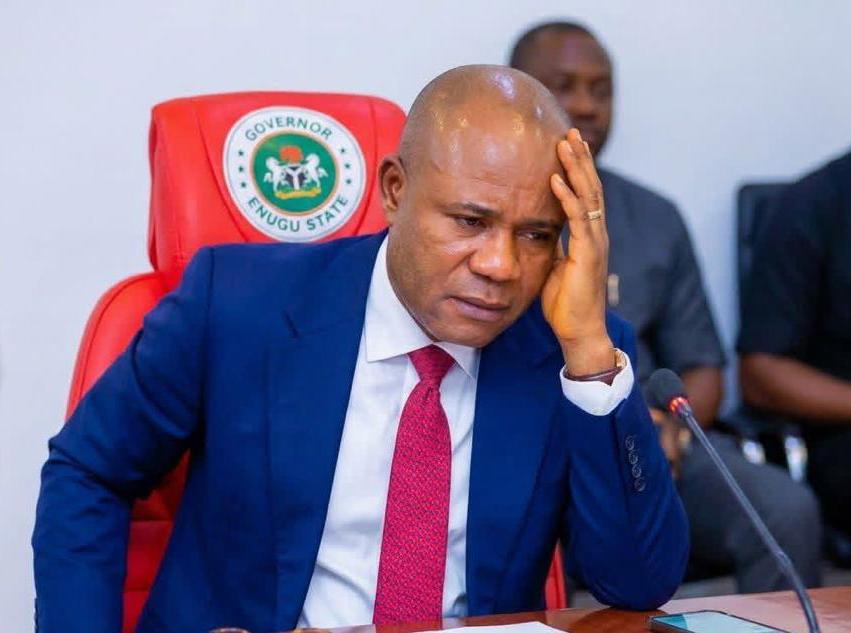
When the administration of Governor Peter Mbah assumed office on May 29, 2023, it came with an ambitious vision of transforming Enugu State through economic expansion, infrastructure development, investment promotion and improved living conditions for the people.
One initiative that naturally attracted considerable public interest was the government’s housing and estate development programme.
The policy itself is commendable. Providing citizens with opportunities to acquire land and build homes can stimulate economic activity, create employment, expand the housing stock and provide individuals and families with an avenue for investment and wealth creation.
Thousands of Ndi Enugu and others therefore responded positively when the government, through the Enugu State Housing Development Corporation and designated estate schemes, offered plots of land for sale.
Many citizens reportedly paid millions of naira, with some estates selling plots for between ₦6.5 million and ₦10 million or more. Developers also paid substantial sums for hectares of land across some of these estates.
They did so with a reasonable expectation: that government would provide the promised site-and-services infrastructure within a reasonable period, enabling them to take physical possession of their plots and commence construction.
Unfortunately, a serious crisis of confidence appears to be developing around the implementation of some of these estate schemes, particularly Blossom Estate, Independence Layout Phase III, University Estate Nsukka, Unity Estate Umuchigbo Nike, Elite Estate Ibagwa Nike, Transite Estate Ninth Mile and Gateway Estate Owo, among others.
Reports from affected allottees indicate that, years after payment and allocation, many purchasers are still unable to gain physical access to their plots. In some cases, allocation documents and even Certificates of Occupancy have reportedly been issued, yet the corresponding physical development and accessibility of the estates remain inadequate or non-existent.
This situation deserves the urgent attention of the Enugu State Government, more so when it has commenced another round of adverts for land sales.
The Blossom Estate Experience
Among the estates around which concerns have been raised, Blossom Estate appears to be particularly significant.
It is reported that more than 2,000 plots had been sold by December 2024, with individual purchasers and developers paying substantial sums for their allocations. Even using a conservative illustrative figure of ₦8 million per plot, the sale of 2,000 plots represents approximately ₦16 billion.
That is an enormous amount of money. Behind the figure are thousands of citizens who committed their savings and investments to a government-backed housing programme.
The natural question is: What has happened to the corresponding development of the estate?
If citizens have paid for plots but remain unable to gain effective physical possession years later, the government owes them an explanation and, more importantly, a solution.
Consider an investor who committed between ₦8 million and ₦100 million to property investments in 2024. Apart from having their capital tied down, such investors have also faced the erosion of purchasing power caused by inflation and rising construction costs. They have equally lost the opportunity to develop the property, generate rental income, or benefit from the appreciation that ordinarily accompanies a functioning estate.
The problem, therefore, goes beyond land ownership. It is a problem of immobilised capital and lost economic opportunity. What is the Enugu State Government doing to minimise the heavy losses already incurred by investors. Treating investors as if the government owes them no obligation negates all touted pillars upon which Peter Mbahs administration stands.
Land Allocation Is Not the Same As Estate Development
Government must recognise an important distinction: selling a plot is not the same as developing an estate.
A purchaser does not merely need a piece of paper showing an allocation. He or she needs an accessible plot within an environment where construction can realistically take place.
That requires roads, drainage, electricity, water, and other basic infrastructure. Without these facilities, the economic value and practical usefulness of the allocation are significantly diminished.
The consequences extend beyond individual purchasers. Every delayed estate represents lost economic activity.
Construction workers lose employment. Architects, engineers, surveyors, and other professionals lose assignments. Suppliers of cement, blocks, roofing materials, doors, windows, electrical fittings, and other building materials lose business. The government itself loses the tax and wider economic benefits that would arise from active construction and eventual occupation.
Delayed estate development is therefore not merely a housing problem; it is an economic development problem.
Independence Layout Phase III and the Broader Concern
The concerns are reportedly not limited to Blossom Estate. Similar complaints have been raised regarding Independence Layout Phase III, where substantial sums are said to have been collected from allottees through land purchases and associated charges, while many purchasers continue to experience difficulties in obtaining effective physical possession.
The reported existence of Certificates of Occupancy in some cases makes the situation even more deserving of government attention. While a certificate may confer legal rights, the ordinary purchaser also expects to be able to physically access and develop the property.
The larger issue, therefore, goes beyond individual estates. It concerns public confidence in government-led land transactions.
Citizens buy government land because they expect the government to be a credible and reliable partner. When the government receives money for a particular development programme, citizens naturally expect to see a corresponding commitment to that programme. Where years pass without visible infrastructure, questions inevitably arise.
Where Is the Money Going?
The Enugu State Government should not regard questions about revenue generated from estate sales and sundry charges as hostile criticism. They are legitimate questions of public accountability.
If the government has collected substantial sums from the sale of plots and associated charges, investors and citizens deserve to know why the promised infrastructure has not been delivered.
This is not an accusation of financial impropriety. It is a call for transparency and accountability in the management of citizens’ investments.
If there are genuine technical, legal, planning, or funding challenges responsible for the delays, the government should simply explain them to the people. Citizens are more likely to accept an honest explanation than prolonged silence and uncertainty. In fact, the existing view that the government has collected these funds and applied them to the jamboree projects of Peter Mbah is damaging.
The Danger of Losing Public Trust
The greatest danger facing the housing programme may not be the delay itself, but the erosion of trust that prolonged delays inevitably produce.
When people pay millions of naira and repeatedly hear that their estate is being developed, yet cannot see roads, drainage, electricity, water, or accessible plots, scepticism naturally grows.
The situation becomes even more problematic when the government continues to sell land and collect additional charges while previously allocated estates remain substantially inaccessible and undeveloped.
This can create the unfortunate perception that government land sales are primarily revenue-generating exercises rather than genuine housing-development programmes.
Whether or not that perception is accurate, the government should recognise that perception is an important component of governance.
An administration seeking to attract private investment into Enugu must ensure that the government itself is seen as a trustworthy participant in the investment environment.
What Government Should Do Now
The situation is not beyond remedy. Indeed, the government can still turn the present concerns into an opportunity to demonstrate responsiveness and accountability.
First, the government should conduct an urgent audit of all ongoing government estate projects, particularly estates where substantial numbers of plots have already been sold.
Second, it should publish a clear development timetable for each estate.
Third, a dedicated mechanism should be established to coordinate infrastructure delivery and monitor progress.
Fourth, the government should provide transparent information on the financial arrangements for each estate, including the relationship between revenue collected and infrastructure commitments.
Fifth, affected allottees should be given a clear channel through which they can obtain information, lodge complaints, and receive timely responses.
Sixth, where government-induced delays have caused demonstrable financial losses or prejudice to purchasers, appropriate remedies should be considered within the applicable legal and contractual framework.
Most importantly, physical development must begin or accelerate visibly.
The most effective response to public cynicism is not another government announcement. It is a road being constructed, drainage being provided, electricity infrastructure being installed, and allottees finally being able to access their plots and begin building.
The Political and Developmental ConsequencThe governmenternment should also appreciate the wider political implications of the situation.
Every person who has invested millions of naira in a government estate is a citizen whose experience shapes his or her perception of government. These individuals belong to families, communities, professional associations and social networks. Their experiences inevitably influence the views of others.
A government that has made economic transformation one of its principal objectives cannot afford to allow a significant group of citizens to feel that their investments have been left stranded.
Governor Mbah’s administration still has an opportunity to correct the situation before it becomes more difficult to manage.
The housing programme can become an important symbol of the administration’s development agenda, but only if the government moves beyond land sales to actual estate development and delivery.
Conclusion
There is nothing inherently wrong with government selling serviced plots to citizens and investors. On the contrary, it is a legitimate and potentially powerful strategy for expanding housing supply, stimulating construction, and mobilising private capital for development.
But the fundamental principle is simple:
The government should not merely sell land; it must deliver the development environment for which citizens paid.
Those who bought these plots did not simply purchase allocation letters. They purchased the expectation that they would obtain accessible land on which they could build homes and investments.
They deserve answers.
They deserve timelines.
They deserve infrastructure.
Above all, they deserve confidence that their government regards their money and trust as important.
The Enugu State Government should, therefore, treat the reported situation in Blossom Estate, Independence Layout Phase III and other affected estates in Enugu city, Ninth Mile, Owo and Nsukka as an urgent matter requiring direct intervention.
The administration still has an opportunity to change the narrative. It can disclose the facts, explain the challenges, publish realistic completion schedules, and commence visible infrastructure development. This cannot wait any further and must not be done for politicking sake.
If this is done promptly, a growing crisis of confidence can still be transformed into an opportunity to demonstrate transparency, responsiveness, and responsible governance.
But if the situation is allowed to continue, public cynicism and frustration may become deeply entrenched.
Enugu does not need more promises of estates. Enugu needs estates that exist, are accessible, are serviced, and can be built upon.
That is the real test of a housing policy.
And that test should be met now.
Nwanne, a certified realtor and estate developer write from Trans Ekulu, Enugu State

Leave a Reply
Your email address will not be published. Required fields are marked *
Category
 News
 Business & Economy
 Culture & Tourism
 Education
 Technology
 Politics
 Entertainment
.jpeg) Interviews
 Religion
 Health
 Crime & Security
 Sports
 Opinion