Home > Opinion > ENUGU-EAST 2027: Can Kelvin Chukwu Hold ...
ENUGU-EAST 2027: Can Kelvin Chukwu Hold the Senate Seat?
By AnchorNews | 04 Oct, 2026 02:42:59pm | 78
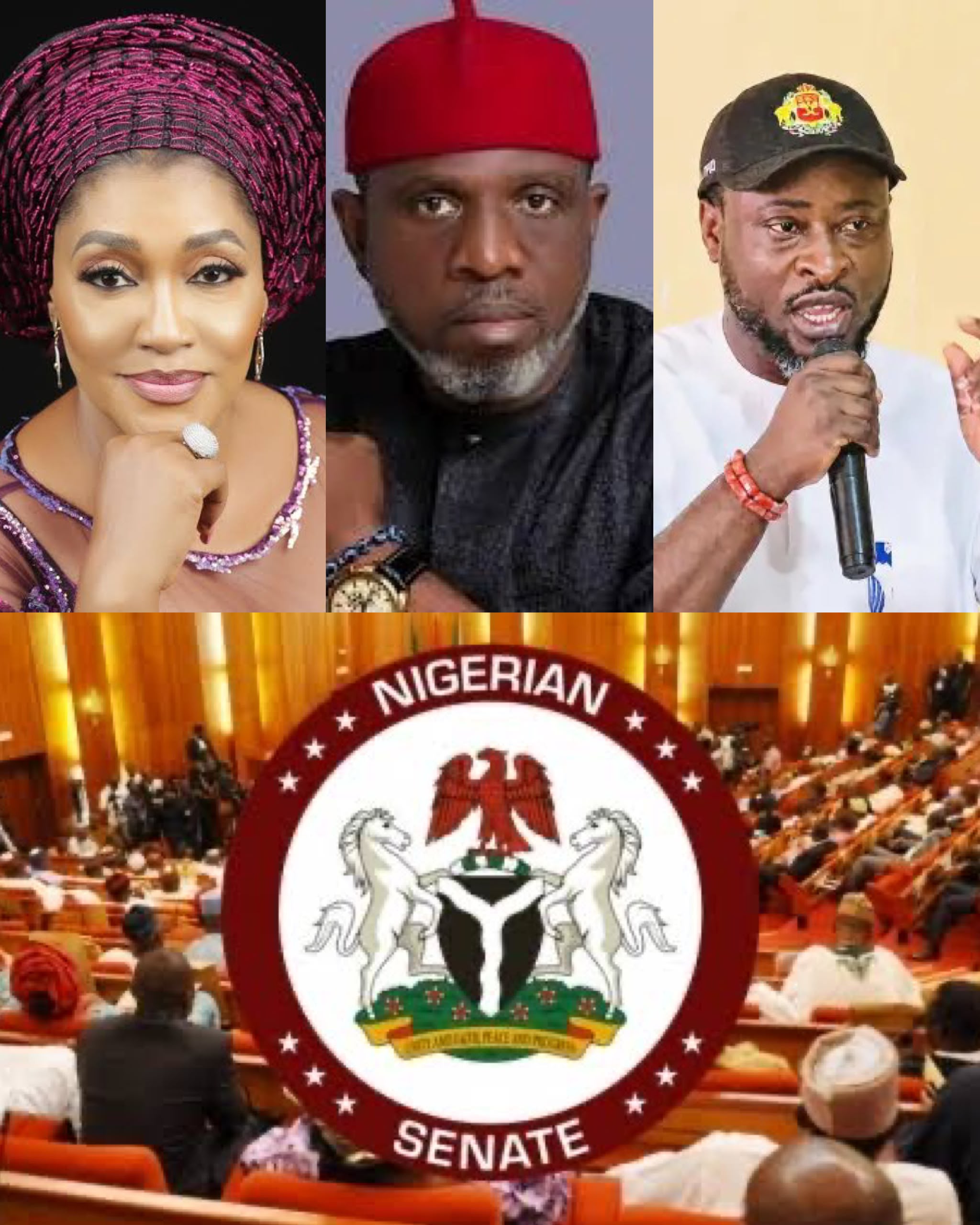
By Dr. Buchi Nnaji | Political Analyst and Public Affairs Commentator
Senator Kelvin Chukwu has a Senate seat to defend, but his biggest challenge in 2027 may not be incumbency. It may be proving that the political coalition that carried him to victory in 2023 can be rebuilt under completely different circumstances. Chukwu is now on the APC platform, while Kingsley Nweke is contesting for the PDP, Adaku Aguocha is on the NDC platform, and Labour, ADC and other parties are also in the field. The central question is therefore unavoidable. How much of the 69,136 votes Chukwu secured in 2023 belonged to Kelvin Chukwu, and how much reflected the extraordinary political wave that surrounded Labour at the time?
The 2023 result was decisive. Chukwu defeated former governor Chimaroke Nnamani by 69,136 votes to 48,701, while APC’s Adaku Ogbu-Aguocha polled 8,548. But the numbers cannot be separated from the circumstances of that election. Chukwu emerged as Labour’s candidate after the assassination of his brother, Oyibo Chukwu, who had originally been the party’s senatorial candidate. His victory also came during the powerful Peter Obi and Labour wave that transformed voting patterns across the Southeast. Chukwu won the election, but 2027 presents a different test because the political environment that produced that victory no longer exists in the same form.
The most significant change is Chukwu’s movement from Labour to APC in October 2025. He attributed the decision to Labour’s internal disorganisation and argued that APC offered a stronger platform from which to serve Enugu East. That explanation may be his political case, but the electoral question remains. The voters who elected him in 2023 did so under a Labour banner. They will encounter him in 2027 under the platform of the governing APC. His opponents therefore have an obvious line of attack. They can ask whether the support that followed Chukwu in 2023 was attached primarily to the man, the Labour platform, the wider Obi wave or the unusual circumstances surrounding that election.
Then there is the record Chukwu will have to defend. His camp can point to constituency interventions, including a road project and a 2026 medical outreach reportedly reaching more than 600 residents across the six local government areas. In the Senate, he sponsored a bill seeking to establish a National Centre for ICT in Nkanu, which passed second reading in November 2025. Those interventions give him material for his campaign, but they do not end the argument. The real issue will be whether voters across Enugu East, Enugu North, Enugu South, Isi-Uzo, Nkanu East and Nkanu West consider the interventions sufficiently visible, broad and consequential to justify another term. An incumbent’s list of projects is not the same thing as an electorate’s verdict on representation.
The APC platform gives Chukwu an additional political argument through his alignment with the federal government. He can present membership of the governing party as an opportunity to secure stronger access to national structures and potentially attract more federal attention and development to the senatorial district. But the same alignment creates a political vulnerability. He must explain why voters who elected him on a Labour platform should regard his transition to APC as a continuation of the mandate rather than a fundamental change in political direction. That explanation will be especially important because his first term is now part of the evidence on which voters can judge him.
Kingsley Nweke gives the PDP a different route into the contest. His public messaging has focused on accessibility, youth empowerment, employment, skills development and protection of votes. His Nkanu West roots provide a local connection, while his residence in the United States has generated questions about proximity to the electorate. Nweke has responded by stressing his regular visits to Enugu and continued engagement with political developments at home. His larger challenge, however, is organisational. The PDP must translate its established political network and Nweke’s campaign message into sustained mobilisation across all six local government areas.
Adaku Aguocha and the NDC add another dimension to the race. The emerging opposition realignment creates space for a candidate seeking to draw voters beyond the traditional APC and PDP structures. But opposition sentiment by itself does not produce votes. Aguocha would need sufficient grassroots organisation across the district to turn political appeal into an effective electoral operation. Labour presents an even more intriguing complication because it is the party from which Chukwu emerged victorious in 2023. If Labour retains a meaningful share of the support associated with that election, it could directly affect the distribution of votes in 2027. ADC and other candidates could add further pressure by taking votes from constituencies that might otherwise consolidate behind one of the major contenders.
That makes vote fragmentation a critical part of the contest. Chukwu does not necessarily need to reproduce his 2023 margin if his opponents divide the electorate among themselves. Conversely, a challenger who succeeds in becoming the principal alternative and attracts support beyond the traditional boundaries of his party could alter the arithmetic considerably. The decisive battle may therefore be less about who generates the loudest campaign and more about who can build the strongest organisation across the six local government areas, protect votes and persuade voters that their candidate offers the clearest alternative.
For Chukwu, the political calculation is consequently more complicated than simply defending an existing seat. He has incumbency, a record to present and the platform of the federal governing party. But he also has to defend that record, explain a major party switch and demonstrate that the coalition behind his 2023 victory was not merely a product of an extraordinary election cycle. His opponents have the opportunity to make those issues central to the campaign, particularly by contrasting the Labour identity of 2023 with the APC identity of 2027 and testing the reach of his constituency and legislative record.
The most revealing question of the election may therefore have nothing to do with whether Kelvin Chukwu won in 2023. He did. The question is whether the political capital represented by those 69,136 votes remains attached to him after the Labour wave, after his departure from Labour and after a full term in office. If he can demonstrate that those votes reflected a durable personal constituency, his 2023 victory will have a very different meaning in retrospect. If the electorate proves less transferable than the 2023 result suggests, the political arithmetic of 2027 will look very different. The Senate seat is already his. The question is whether the political capital behind it is still his to command.
Dr. Buchi Nnaji, a Political Analyst and Public Affairs Commentator, writes from Nkanu West LGA, Enugu State, Nigeria.
Leave a Reply
Your email address will not be published. Required fields are marked *
Category
 Politics
 Entertainment
 News
News Crime & Security
 Sports
  Opinion
.jpeg) Interviews
Interviews Religion
  Culture & Tourism
 Health
 Technology
 Business & Economy
 Education