Home > Opinion > Why Enugu’s Future Depends on Leadersh...
Why Enugu’s Future Depends on Leadership That Works, Not Just Talk
By Chimdiogo | 29 Dec, 2025 04:20:35pm | 567

By Dr. Buchi Nnaji
In the legislative chambers of our 17 Local Government Areas and the vibrant markets of Ogbete and Nsukka, a fundamental truth remains: leadership at the grassroots of Enugu State must first be about service, not slogans. While grand political rhetoric in Abuja or a flashy billboard along the Enugu-Onitsha Expressway might capture a temporary headline, it rarely fixes a rural feeder road or ensures that a Primary Health Care center has basic medicines. Real progress in Nigeria is rooted in the work of individuals who view their roles as a stewardship of the public trust rather than a platform for personal branding.
The most effective local leaders in Enugu understand that their primary job is to be architects of community well-being, requiring a radical shift away from the "campaign mode" that often dominates Nigerian politics. When a Chairman or Councilor prioritizes service over vanity, the focus shifts from winning the next news cycle to solving the tangible problems that affect the daily lives of the people of Wawa. This transition from performer to practitioner is what separates a mere politician from a true public servant in the eyes of the electorate.
Growth in our towns and villages is not merely a matter of state-level economic statistics; it is a social phenomenon that begins with the simple act of paying attention. When leaders in Enugu listen, our communities grow because the people begin to feel a sense of agency and ownership over their local development. When Nigerian citizens feel heard, they are far more likely to invest their own time and resources back into their neighborhood, creating a virtuous cycle of engagement, which symbolizes the spirit of Igwebuike that no top-down government directive could ever replicate.
Listening is an active, often difficult skill that requires our leaders to step outside their air-conditioned offices and brave the discomfort of local dissent. It involves attending the unglamorous town hall meetings, walking the streets of Abakpa or Agbani, and hearing the concerns of those who do not have the loudest voices or the deepest pockets. By absorbing the collective wisdom of the community, a local leader can identify unique, localized solutions like a community-led security initiative or a market-specific drainage plan that a distant, generalized approach would inevitably miss.
Conversely, the breakdown of our local governance is often a silent, corrosive process that starts when communication fails. In the Nigerian context, when leaders ignore the people, distrust grows like a slow-acting poison, eroding the social contract between the governed and the governors. When residents in our rural wards feel that their input is treated as a mere formality or is completely irrelevant to the decision-making process, they withdraw from civic life, leaving a vacuum filled by apathy, or worse, social unrest.
This erosion of trust makes even the most well-intentioned state project difficult to execute, as every proposal is met with suspicion rather than collaboration. Without the genuine buy-in of the public, local initiatives face constant friction and administrative gridlock at the grassroots. A leader who operates in a vacuum may eventually find themselves at the helm of a local government ship that no one wants to board, leading to a stagnant environment where progress is permanently stalled by mutual doubt.
In our current Nigerian age of digital distraction, it is increasingly easy to mistake a viral social media post for a genuine administrative achievement. However, true leadership in Enugu must be measured by impact, not noise. High-decibel debates on radio stations and photoshopped images of "projects" on Facebook may create the illusion of momentum, but they are often nothing more than empty calories in the diet of our civic health. The real metrics of success are found in the quality of our local boreholes, the safety of our farms, and the resilience of our small-scale traders.
Impact in Enugu is frequently quiet and patient. It is the steady improvement of a village school over a decade, the successful mediation of an age-old land dispute, or the implementation of a local budget that prioritizes agricultural grants over short-term political patronage. These are not "flashy" wins that trend on Nigerian Twitter, but they are the bedrock of a functional society. A leader focused on impact cares infinitely more about the lasting legacy of their work in their community than the current volume of their applause.
Ultimately, the local government level is where the "rubber meets the road" in Nigerian governance, representing the most intimate and influential form of leadership we have. It is the space where the decisions made at a local council meeting directly affect the price of a basin of garri or the accessibility of a clean maternity ward the following morning. This proximity demands a higher level of accountability and a deeper commitment to substance than any other level of government in the Federation.
We are currently at a crossroads in Enugu State where we must decide what kind of local leadership we truly value for our future. We must choose whether we want performers who can craft the perfect, hollow soundbite for the cameras, or practitioners who possess the character to craft a better reality for their neighbors. By demanding service over slogans and impact over noise, we ensure that our communities do not just survive the challenges of the day, but truly thrive for generations of Nigerians to come.
Dr. Buchi Nnaji writes from Awkunanaw, in Nkanu West LGA of Enugu State.

Leave a Reply
Your email address will not be published. Required fields are marked *
Category
 Sports
  Health
 Entertainment
 Religion
  Culture & Tourism
 Opinion
 Politics
 Technology
 Crime & Security
 Business & Economy
.jpeg) Interviews
Interviews News
News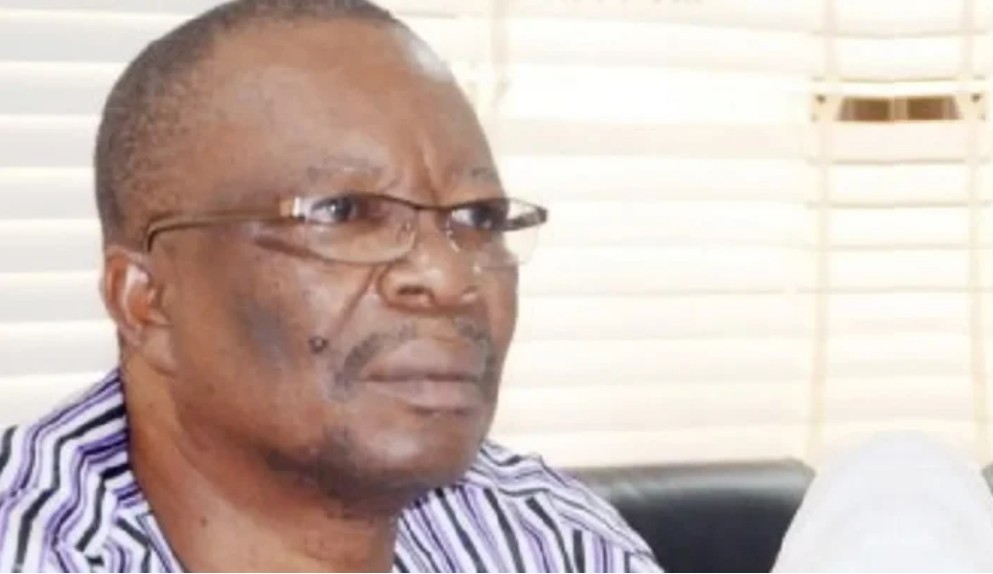 Education