Home > Politics > 2027: Defections Shake National Assembly...
2027: Defections Shake National Assembly as NDC Emerges Stronger
By AnchorNews | 06 May, 2026 10:00:06am | 18
By Sandra Ugwu
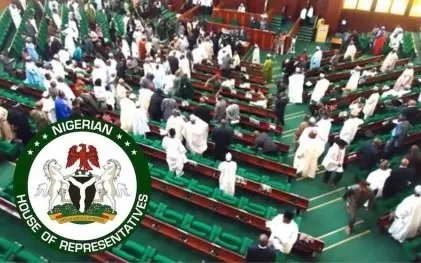
ABUJA - A fresh wave of political defections has altered the balance of power in the National Assembly, with no fewer than 19 lawmakers dumping their parties for the Nigeria Democratic Congress (NDC), citing deep-rooted internal crises and leadership disputes.
The movement, which cuts across both chambers, has significantly strengthened the NDC’s foothold, elevating it beyond the African Democratic Congress (ADC) in the House of Representatives and positioning it as a fast-rising force ahead of the 2027 general elections. In the Senate, Victor Umeh of Anambra Central defected from the ADC to the NDC, while Rufai Hanga of Kano Central joined from the NNPP. Their arrival brings the number of NDC senators to three, alongside the party’s founder, Seriake Dickson. In a related move, Enyinnaya Abaribe of Abia South exited the ADC for the Labour Party, also blaming protracted leadership and legal crises within the party.
Following the defections, the Senate’s configuration now stands at APC-88, ADC-8, PDP-4, NDC-3, APGA-1, Accord-1, with four seats vacant due to deaths and a resignation. In the House of Representatives, at least 18 lawmakers abandoned the ADC, with 17 joining the NDC and one moving to the APC. The shift leaves the APC with 260 members, PDP with 38, LP 21, NDC 17, NNPP 14, APGA 5, and others 4, though the figures remain fluid pending final submissions to the electoral body.
Many of the defectors, drawn from states including Kano, Anambra, Lagos, Edo and Rivers, attributed their decisions to persistent instability within their former parties, describing the situation as riddled with unresolved crises from the national to the grassroots level. Some lawmakers said the internal disarray had made it increasingly difficult to effectively represent their constituents, while others noted that ongoing factional disputes and litigation had rendered their platforms unreliable vehicles for the approaching elections.
Letters announcing the defections, read during plenary, reflected a common theme of frustration with party structures. The lawmakers insisted that their moves followed extensive consultations with constituents and political stakeholders, and were driven by a desire to align with what they described as a more stable and ideologically compatible platform.
Reacting on the floor of the Senate, Senate President Godswill Akpabio openly questioned the viability of the ADC, remarking that the frequency of defections suggested the party may have lost its relevance. He joked about the growing trend, suggesting that lawmakers should consolidate their defection notices instead of making repeated individual announcements.
The development has heightened concerns within the legislature over the increasing volatility of Nigeria’s party system, with many warning that persistent internal conflicts are fueling a cycle of defections that could reshape alliances ahead of 2027. In a related twist, the All Democratic Alliance (ADA) distanced itself from criticisms of the NDC’s registration by one of its officials, clarifying that the remarks were made in a personal capacity. The party maintained that the NDC remains a legitimate platform and stressed the need for opposition unity rather than internal sabotage.
The latest realignments underline a deepening crisis within several opposition parties while simultaneously accelerating the rise of the NDC as a formidable contender in Nigeria’s evolving political landscape.

Leave a Reply
Your email address will not be published. Required fields are marked *
Category
 Health
 Crime & Security
.jpeg) Interviews
Interviews Opinion
 Education
  Sports
  News
News Politics
 Business & Economy
 Religion
  Culture & Tourism
 Entertainment
 Technology