Home > Crime & Security > Kanu's Life Sentence and the Tremor Nige...
Kanu's Life Sentence and the Tremor Nigeria Could Not Ignore
By AnchorNews | 21 Nov, 2025 06:27:14am | 218
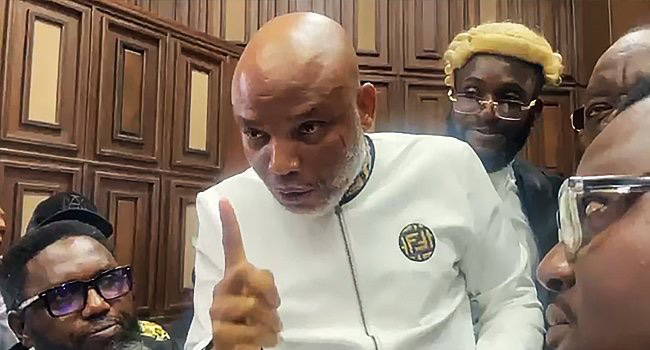
By Dr. Buchi Nnaji
The life sentence handed to Mazi Nnamdi Kanu has once again placed Nigeria at the centre of difficult national conversations - about justice, unity, and the unresolved tensions that continue to strain the federation. While the court laid out several allegations involving incitement and actions that contributed to unrest in parts of the southeast, it is important to acknowledge these concerns with balance and fairness. Some of Kanu’s statements and directives, especially through Radio Biafra, were viewed by many as unhelpful and capable of heightening already fragile situations. Even so, these actions must be discussed within a broader context, not isolated from the complex grievances that shaped them.
The judgment itself, however, has generated even deeper controversy than the allegations. Many Nigerians, both within and outside the southeast, have described the life sentence as excessively punitive, particularly given the disputed circumstances of Kanu’s 2021 rendition and the concerns raised throughout the trial about adherence to due process. The outcome of the case has revived longstanding worries about the uneven dispensation of justice in the country - worries that cannot be dismissed if Nigeria hopes to achieve national cohesion.
What troubles many observers is not whether Kanu should be held accountable, he should, but whether the state’s approach to the situation reflects wisdom or simply force. Across Nigeria, similar or even more destabilizing actors have been invited to negotiation tables, granted amnesty, or treated with leniency in the name of national stability. Yet the southeastern agitation continues to be met with the full weight of punitive mechanisms, feeding an impression that the region is judged by a different standard.
This perception cannot be separated from the painful history of the Igbo people- one defined by civil war trauma, political exclusion, economic imbalance, and repeated episodes of disproportionate state response. For many in the southeast, the life sentence is not just a legal decision; it is another reminder of generational wounds that have never been honestly addressed. When justice appears selective, unity becomes fragile.
More importantly, Nigeria finds itself under severe pressure from widespread attacks by insurgents, bandits, extremist sects, and heavily armed criminal networks. Entire communities are being displaced, security operatives overwhelmed, and national resources stretched thin. At a time when the nation is literally under siege, the intense focus on incarcerating one separatist leader raises serious questions about priorities. Security experts have repeatedly stressed that Nigeria cannot afford distractions from its most pressing threats.
The Kanu case, therefore, should not become another symbol of division. It should instead be an invitation to rethink how Nigeria handles political agitations. Jailing one individual will not extinguish a sentiment shared by millions, nor will harsh punishment resolve deep-rooted structural and emotional grievances. A political crisis demands political tools: dialogue, negotiation, equitable development, and sincere engagement with communities who feel unheard.
There is a real need for leadership that recognizes the difference between security threats that require the barrel of the gun and political questions that require the openness of the dialogue table. The southeast, like every region, deserves a fair hearing, a sense of belonging, and clear evidence that the state does not differentiate between its citizens. No nation has ever successfully silenced identity-based grievances through punishment alone.
Nigeria stands at a crossroads. The choice before us is whether to continue relying exclusively on force or to embrace a wiser, more inclusive path. The life imprisonment of Mazi Nnamdi Kanu may satisfy some legal arguments, but it does not answer the political and historical questions that lie at the heart of the agitation. As a nation, we will only move forward when justice is even-handed, when every group feels valued, and when political solutions are given the priority they deserve.
Dr. Buchi Nnaji is an analytical writer whose works blend deep research, balanced perspectives, and compelling narrative clarity to illuminate complex national issues.

Leave a Reply
Your email address will not be published. Required fields are marked *
Category
 Education
  News
News Entertainment
 Technology
 Culture & Tourism
.jpeg) Interviews
Interviews Sports
  Crime & Security
 Health
 Opinion
 Business & Economy
 Religion
  Politics